


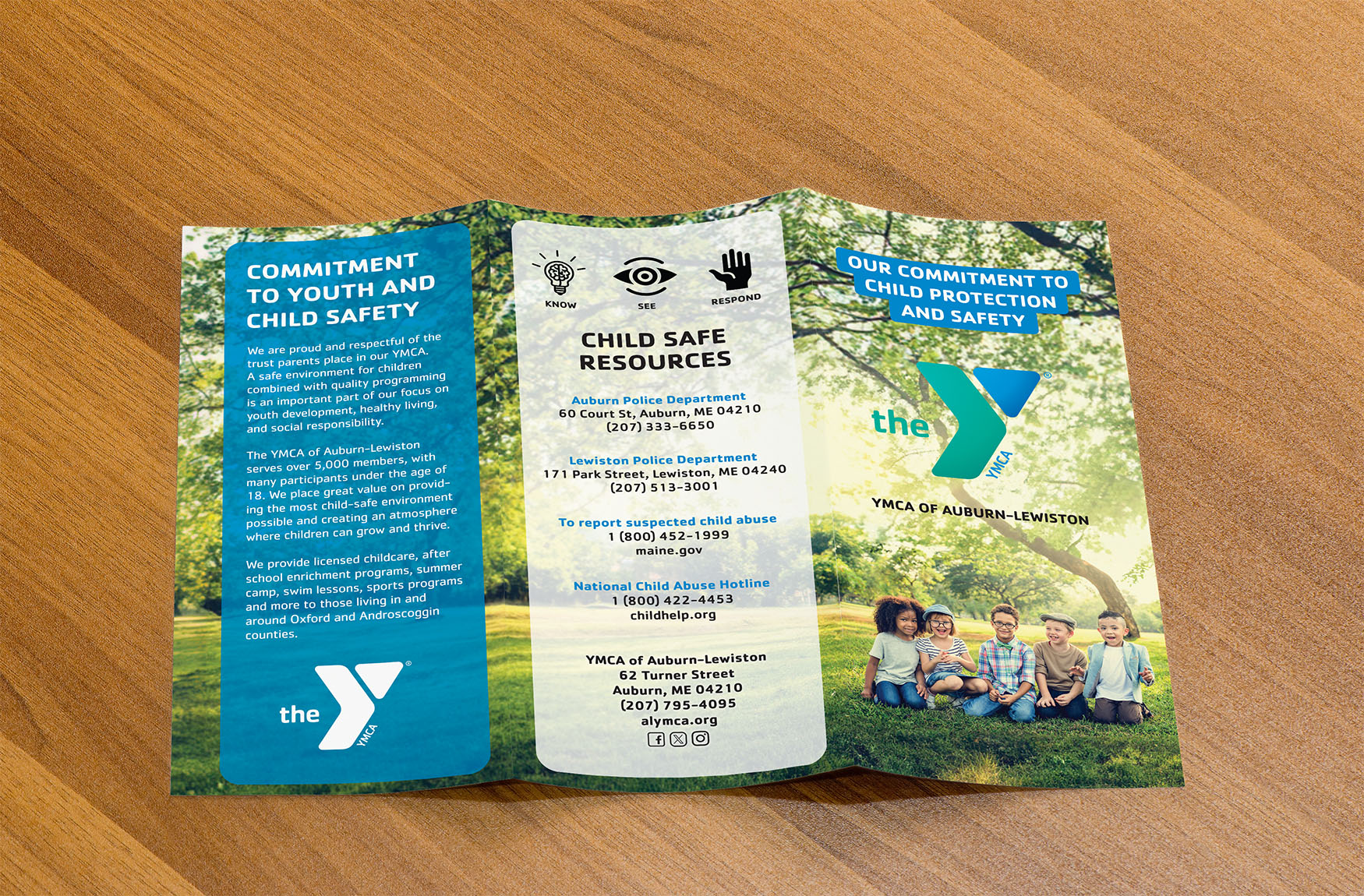
We are proud and respectful of the trust parents place in our YMCA. A safe environment for children combined with quality programming is an important part of our focus on youth development, healthy living, and social responsibility.
The YMCA of Auburn-Lewiston serves over 5,000 members, with many participants under the age of 18. We provide licensed childcare, after school enrichment, summer camp, and youth sports programs to those living in and around Oxford and Androscoggin counties. We place great value on providing the most child-safe environment possible and creating an atmosphere where children can grow and thrive.
All YMCA staff members are trained in abuse prevention. Employees trained in abuse prevention are more likely to understand their role as a protector, to recognize the signs that abuse is occurring, and to report suspicious or inappropriate behaviors. Trained staff members are also less likely to place themselves in situations where they could be falsely accused.
Policies exist to ensure staff and volunteers are not alone with a child. All interactions between a staff member or volunteer and a child must be observable and interruptible. We take the following steps to keep children in our programs safe:
➡️ KNOW:
Information About Abuse
➡️ SEE:
Warning Signs of Child Abuse
➡️ RESPOND:
Take Action Against Abuse
Report suspected child abuse in Maine:
1 (800) 452-1999
maine.gov
National Child Abuse Hotline:
1 (800) 422-4453
childhelp.org
Auburn Police Department:
60 Court St, Auburn, ME 04210
(207) 333-6650
Lewiston Police Department:
171 Park Street, Lewiston, ME 04240
(207) 513-3001
Suspected abuse can also be reported directly to our HR department:
Ask your child these questions periodically:
EDUCATE your child about self-protection, including information about strangers, and good and bad touches.
LEARN to control the stress level of yourself and family members.
COMMUNICATE with your child and really listen to their concerns.
RECOGNIZE the fact that most abuse happens by people that children know and trust.
BECOME AWARE of your community resources.
KNOW where your children are and who their friends are.
TEACH your children it’s not okay to keep secrets from you, that they can always tell you the truth.
Keep a copy of the information presented on this page – click here to download our Trifold Brochure PDF.

Five Days of Action is designed to raise awareness as our community takes action to protect children from abuse. The YMCA runs this campaign each April as part of National Child Abuse Prevention month. This year, we’re focusing on digital safety. Join the YMCA of Auburn-Lewiston from April 13-17, 2026, as we share tips, tools, and resources to help families build safer digital spaces together:
ACTION ITEM #1
Build a Digital Open-Door Policy
Instead of making online safety a one-time talk, treat it like something that needs maintenance, an ongoing and evolving conversation. Encourage your kids to share what they’re doing online and who they’re talking to. Tell your kids that if they see something scary, uncomfortable, or weird, they can come to you without fear of losing their device or getting into trouble. This open-door policy ensures they don’t hide any problems or potentially dangerous situations over fear of being grounded.
ACTION ITEM #2
Screens in Common Areas
Before your kids are old enough to have their own phones, it’s a good idea to keep computers, gaming consoles, and tablets in shared family spaces. This visibility allows you to naturally monitor what’s on the screen without hovering. Keeping screens out of bedrooms also prevents late-night unsupervised browsing and helps promote healthier sleep patterns (sleep hygiene).
ACTION ITEM #3
Confirm Privacy Settings
Modern apps often default to data-heavy user settings. Even after permissions have been set, they may revert to default following updates. If your child has their own device, remember to check the location, camera, and profile visibility permissions. Turn off GPS/Location access for apps that don’t strictly need it, like games or photo editors. Disable access to the camera and microphone for apps unless they are actively being used for a specific purpose. Use the most restrictive privacy settings available on social platforms, ensuring your child’s profile is only visible to people approved by you the parent.
ACTION ITEM #4
Red Flag Recognition
Help kids identify common online tactics and potentially dangerous situations. Teach your children that if an online friend asks them to keep a secret from their parents, that is an immediate red flag. Explain that pop-up offers or quizzes that appear online are often just tricks to collect personal data like names, school locations, or passwords. Reinforce that friends online should be people they have met and know in real life.
ACTION ITEM #5
Utilize Smart Parental Controls
While not a replacement for supervision, tech tools can provide a necessary safety net. Enable SafeSearch on Google and restricted modes on YouTube to filter out mature content. Set up your family account so that every new app download requires a notification and approval from your phone. Use built-in features (Screen Time on iOS or Family Link on Android) to set downtime hours when certain apps will be inaccessible.

Y USA Child Protection Website
https://www.ymca.org/what-we-do/youth-development/child-care/child-protection
6 Perpetrator Grooming Behaviors Every Parent Needs to Know
https://saprea.org/blog/6-perpetrator-grooming-behaviors/
Safeguarding Youth in Sports
https://www.praesidiuminc.com/safeguarding-youth-in-sports/
National Center for Missing and Exploited Children Cyber Tipline
https://www.missingkids.org/gethelpnow/cybertipline
U.S. Center for SafeSport Parents Page
https://uscenterforsafesport.org/parents/